09.07.2026
The Resilience Behind Ukraine’s Healthcare Transformation
One of the questions ZDOROVI is frequently asked in conversations with representatives of the international community is: How does Ukraine’s healthcare system manage not only to survive, but also to grow and develop amid war and constant crises?
Frankly speaking, our case is indeed unique. Despite the war, healthcare reforms have continued, hospitals have expanded critical services and improved their quality, and new standards of care have been introduced in several medical fields. This is supported by the third joint review of the WHO and the World Bank, which states that Ukraine’s health system and the overall design of the health reforms have demonstrated significant resilience in responding to the challenges brought about by the war.
The resource that keeps the system afloat is the exceptional resilience of people — especially healthcare workers, who continue to provide care despite shelling, displacement, personal loss, power outages, and chronic staff shortages. Not resource capacity, not government decisions, not the size of the country, nor even the international support that we constantly receive and for which we are incredibly grateful. The decisive factor is the strength, devotion, dignity, and profound sense of justice inherent in Ukrainians that move us forward every single day.
Ukraine has been engaged in a hybrid war for more than 12 years and in a full-scale war for more than 4 years. We have adapted to many challenges, including those affecting healthcare. Today, Ukraine’s healthcare sector receives substantial support from international donors and partners, humanitarian organizations, state and local authorities, individual volunteers and philanthropists, as well as businesses. Such comprehensive support enables the medical community to continue developing, implementing reforms, and improving the quality of services provided.
ZDOROVI has worked with more than 70 international donors, some of whom continue to approve funding for our joint projects year after year. For several years, the largest share of funding was directed toward Ukraine’s frontline regions — understandably so, as healthcare facilities in these areas suffer the most from hostilities.
However, as the war became prolonged, the geography of healthcare demand changed. Given the new reality of life in Ukraine — millions of displaced persons; injured civilians and military personnel evacuated to safer regions for treatment and rehabilitation; and veterans who require long-term care, rehabilitation, and reintegration support — we are witnessing growing demand for humanitarian aid and charitable assistance in the central and western regions of the country. Medical facilities in these areas face the highest patient load and often lack the capacity to manage it.
Ukraine was not prepared for war. Neither in 2014, nor 2022. We did not anticipate challenges of this scale. It is nothing short of remarkable that the Ukrainian healthcare system did not collapse. It endured thanks to a combination of professional dedication, rapid adaptation, local initiative, and unprecedented international support. Yet we learned our lesson, and we consider it our mission to share this experience with the world so that no other European country has to face the same crisis.
Critical Clinical Specialties in Wartime Healthcare
In wartime, the clinical specialties under the greatest pressure are emergency and critical care, surgery, traumatology, rehabilitation, and mental healthcare. However, all medical facilities must be prepared for emergencies, mass-casualty incidents, and complex medical cases such as polytrauma.
Hospital admission and emergency department staff, in particular, require training in effective patient triage (for example, M.A.R.C.H. PAWS triage), mass-casualty prioritization, and the management of large patient surges. Mental health support should also be an integral part of staff preparedness, including both psychological self-help and peer support.
At the same time, theoretical training is not enough to prepare medical professionals for the reality of providing care amid war; it also requires practical experience. Ukrainian hospitals are open to cooperation with international medical humanitarian organizations, international medical partnership programs, and internships for individual medical specialists.
However, for such cooperation to be effective and large-scale, it must be coordinated at the governmental level. Otherwise, its impact will remain insufficient to achieve meaningful systemic change in the healthcare system.
Rebuilding During War: Why Recovery Cannot Wait
According to the joint Rapid Damage and Needs Assessment (RDNA5), released in February 2026 by the Government of Ukraine, the World Bank Group, the European Commission, and the United Nations, the direct damage caused by the war in Ukraine has now exceeded $195 billion (€166 billion), with the housing, transport, and energy sectors being the most affected.
Ukraine’s healthcare sector has also suffered severely. According to the Ministry of Health of Ukraine, by the end of 2025, 2,551 healthcare facility buildings had been damaged and 327 destroyed by hostilities and shelling. General hospitals suffered the greatest damage, accounting for 56% of the total cost of losses.
The losses resulting from disruptions to the healthcare system and interruptions in the provision of medical services are estimated at $23.1 billion. This reflects the systemic impact of the war on healthcare delivery and the sector’s ability to meet the needs of the population.
The Russian-Ukrainian war is still ongoing, but we are already working on recovery and rebuilding damaged facilities and infrastructure, while also planning our next steps for the decades ahead. In my opinion, this is the right approach: we cannot wait until hostilities are over. We simply do not have the time or capacity to do so. Every year of delay will lead to stagnation and a loss of reform momentum.
According to RDNA5, the estimated total cost of reconstruction and recovery in Ukraine will amount to nearly $588 billion (over €500 billion) over the next decade. In the healthcare sector alone, the estimated reconstruction and recovery needs, according to RDNA4, reach $19.4 billion over the next ten years.
So, where do we get the funding for such large-scale reconstruction and recovery? Ukraine’s budget cannot cover such expenses alone. Accordingly, we need the support of the international community. This is where the humanitarian sector steps in. Large charitable foundations, humanitarian organizations, and other NGOs, such as ZDOROVI, play a critical role in mobilizing international assistance for Ukraine — from international donors, philanthropists, and major humanitarian organizations.
In 2022, dozens of large and small charitable organizations operated across Ukraine and supported different areas of life. However, by 2026, the humanitarian sector has become increasingly concentrated around larger organizations. They have years of experience, international trust built through transparent work, strong donor partnerships, and the resources necessary to implement large-scale recovery projects. As the leader of such an NGO, I can say that sustaining this work today requires resilience, creativity, strategic thinking, and a long-term commitment.
The architecture of humanitarian aid, shaped many years ago, now requires a fundamental rethink. It remains overly centralized and cumbersome, and decisions are often made far removed from the realities that healthcare professionals face every day in operating rooms under shelling.
A humanitarian response system capable of addressing crises, disasters, and future global challenges should function as a flexible network of hubs and solutions. It should invest not in the temporary filling of gaps, but in building local capacity and strengthening the long-term resilience of national systems — in this case, the healthcare system.
The Humanitarian Sector: Filling Gaps, Not Replacing the State
The key advantages of the humanitarian sector are flexibility, rapid response, and reduced bureaucracy, which allow NGOs to work side by side with the government, filling gaps rather than duplicating its functions. Ukraine arrived at this conclusion through trial and error. Over the years, we have transformed the chaotic volunteer movement into a structured and efficient humanitarian response, while the primary responsibility for multisectoral support remained with state institutions.
Ukraine’s humanitarian sector continues to develop and evolve. In 2022, we were forced to cover the most obvious demands in healthcare — deliver humanitarian shipments of medications and medical consumables, as healthcare facilities couldn’t cope with the scale of needs. By 2026, Ukraine’s civil society sector is gradually evolving into a mature actor that provides analysis, consulting, and institutional support.
At present, emergency humanitarian response remains largely within the domain of civil society organizations. However, they have also become a bridge between the government and the ultimate beneficiary — in ZDOROVI’s case, the healthcare facilities.
There are several areas in which the humanitarian sector can provide significant support to public authorities. One of them is localization, which has become a major trend in the global humanitarian sector. Local NGOs are well-informed about their region, the local beneficiaries, opportunities, and policies and regulations. When such organizations work in tandem with the local authorities, the results are often tangible.
Another area where civil society organizations can be helpful is the monitoring of the appropriate and effective use of the provided humanitarian aid. Delivering large volumes of humanitarian aid to a single medical facility without a proper needs assessment and equitable distribution among beneficiaries is inefficient and may ultimately harm an NGO’s reputation.
For ZDOROVI, conducting monitoring visits to the facilities we support is essential. These visits are based on our proprietary Transparent Hospital Audit methodology and help build trust among beneficiaries, NGOs, and international donors. Moreover, we have encountered rare cases — just 4 out of 270 monitoring visits — in which equipment provided as humanitarian aid by our donors had to be withdrawn from beneficiary facilities due to its inappropriate or ineffective use. Such cases are extremely uncommon, but beneficiaries should understand that the inappropriate use of humanitarian aid may have consequences.
Finally, an increasingly important function of the humanitarian sector is contributing to long-term planning, policy development, strategic partnerships, and sectoral roadmaps. Over the past four years, civil society organizations in Ukraine have accumulated substantial expertise and practical experience. As a result, government officials increasingly consider their recommendations, implement joint initiatives, and explore mechanisms for combining state and donor funding. Few civil society organizations could have imagined in 2022 that they would play such a significant role in shaping the future development of key sectors. Yet, by 2026, this has become a reality.
ZDOROVI’s Experience Scaling Up in Wartime Conditions
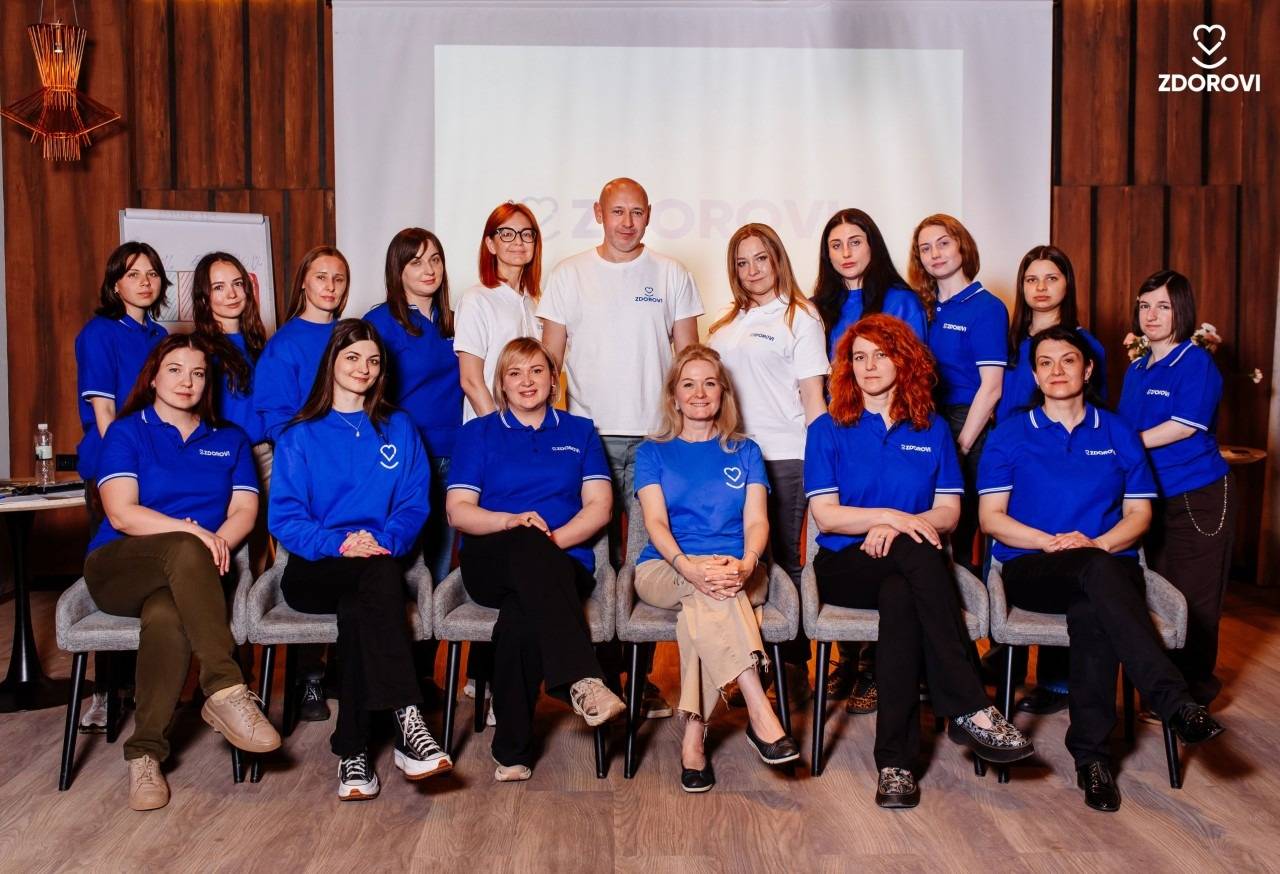
The ZDOROVI charitable foundation is one of the clearest examples of how Ukrainian humanitarian organizations have evolved from emergency response actors into contributors to long-term healthcare development.
For 13 years, we have supported the development of Ukraine’s healthcare sector. The organization began as a healthcare research initiative, conducting studies in partnership with the European Bank for Reconstruction and Development. It later expanded into educational and training programs for medical professionals in response to the growing need for healthcare reform.
Since 2022, ZDOROVI has focused on crisis response, supporting hospitals and the broader healthcare system. During 2022–2023, we focused almost entirely on humanitarian logistics, supplying equipment, medications, consumables, and other medical supplies.
However, from the very beginning, we built a system in which medical aid from abroad was delivered according to predefined lists based on identified needs. This system ensured that humanitarian support was guided by verified clinical demand rather than supply availability. Through the Ministry of Health’s specialized platform, MedData, we were able to assess real hospital needs and efficiently organize support.
According to the Ministry of Health of Ukraine, in 2022, during the period of martial law, Ukraine received medical humanitarian aid worth UAH 12.85 billion (approximately $349 million). In 2022 alone, ZDOROVI distributed medical humanitarian aid worth UAH 813 million (approximately $22 million), making it one of the largest humanitarian actors in Ukraine’s healthcare sector.
Over time, our work has shifted toward project-based activities — instead of receiving goods, we have begun to primarily receive funding.
Since 2024, the organization has also been actively involved in strategic development, reconstruction, recovery, and European integration initiatives. Its core areas of work include procurement, healthcare facility monitoring, training, research, mental health support for medical professionals, and advocacy.
In 2026, ZDOROVI expanded its role by supporting smaller healthcare NGOs and charitable organizations, helping strengthen local capacity and broaden the impact of humanitarian assistance. Strategically, this is a logical step.
At the same time, growth inevitably brings its own challenges. We are continuously expanding into new areas where we see clear needs and where we are capable of contributing. This is part of Ukraine’s broader path toward European integration. We do not need to wait years to align with the European Union — we can already begin implementing and harmonizing policies, standards, and protocols, including in healthcare. For organizations such as ZDOROVI, supporting healthcare institutions through this transition is no longer a future task — it is already underway.
Article author – Nataliia Tulinova